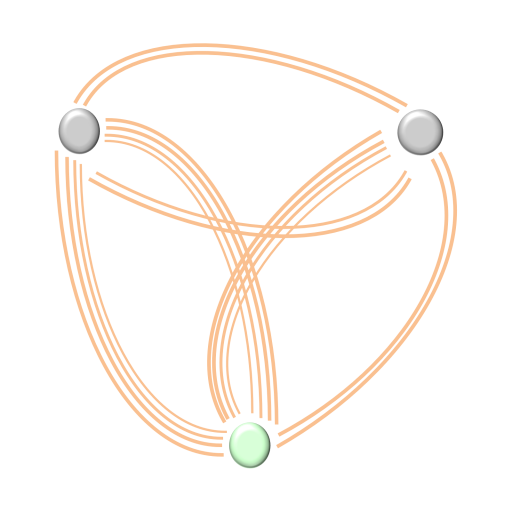
Introduction
Results from the early study up to 4 years of age indicated that parents consistently held back concerning contribution – a term used to describe a starting point for an interaction sequence. Parents allowed the “child’s just being” to launch conversation, a possible sign of good co-parenting. Types of child contributions varied over time. When the child was 3 months old, its parents acted as though all its behaviours were intentional contributions, while child contributions at 48 months generally had a communicative character. The overall difference in frequency of turn-taking sequences over time for the child (p = 0.006) was significant and for parents non-significant. Turn-taking sequences were more frequent at 18 and 48 months.
Cultural differences
Discovering whether there are any cultural differences regarding triadic interactions between Swedish and US families (paper II)
The goal of this study was to examine the tempo of triadic play in Swedish and US families by comparing 20 families from each culture when infants were about 3 months old. The LTP system was used; all play sessions were coded separately in Sweden and the US using coding systems that had been developed in each country.
Seattle coding system analyses. The tempo of play, defined as the number of changes in activity per minute, was examined cross-culturally over the first three phases of the LTP in a series of t-tests. US mother-baby interactions had a significantly faster tempo of play than Swedish mother-infant interactions (US M = 4.23; Swedish M = 2.3, t (38) = 2.67, p = 0.01, two-tailed). The tempo of father-baby play was not significantly different across groups (t (38) = 1.78, NS, two-tailed). US families again demonstrated a significantly faster tempo during the mother-father-baby phase of play than Swedish families (US M = 4.43, Swedish M = 2.5, t (38) = 2.97, p = .005, two-tailed).
Stockholm coding system analyses. The Stockholm group examined the micro-elements and sequences of interaction in another series of t-tests. Significantly more turn-taking sequences initiated by the baby (per cent contributions that led to turn-takings of total contributions) were evident in US compared to Swedish families (US M = 39%, Swedish M = 27%, t (38) = -3.55, p = 0.01, two-tailed). There were no significant differences across cultures in contributions leading to turn-takings for mothers or fathers (t (38) = 0.04, NS; t (38) = -1.1, NS). Babies in both countries made significantly more contributions overall than either their mothers (US t (19) = 8.0, p < 0.001, two-tailed; Swedish, t (19) = 4.73, p < 0.001, two-tailed), or their fathers (US t (19) = 8.47, p < 0.001, two-tailed; Swedish, t (19) = 4.6, p < 0.001, two-tailed).
An examination of turns, the core micro-elements within turn-taking sequences, revealed the Swedish babies exhibited more turns within a turn-taking than US babies (US M = 14.3, Swedish M = 18.78, t (38) = 2.26, p = 0.03, two-tailed). But US fathers exhibited significantly more turns within the larger turn-taking than Swedish fathers (US M = 7.9, Swedish M = 0.8, t (38) = 2.98, p = 0.007, two-tailed). Swedish and US mothers differed non-significantly in the number of turns they exhibited (t (38) = -0.77, NS).
To continue this micro-analysis, turns that took the form of affirmations, validating infant contributions, were examined. These analyses revealed that US mothers did significantly more non-verbal affirming during triadic play than Swedish mothers (US M = 17.1, Swedish M = 6.6, t (38) = -4.03, p = 0.0004, two-tailed) with no significant difference in mothers’ verbal affirming (t (38) = -1.97, ns, two-tailed). US fathers also did significantly more non-verbal affirming than Swedish fathers (US M = 15.8, Swedish M = 6.3, t (38) = -5.38, p < 0.0001, two-tailed), but there was no significant difference in the verbal affirmations used by fathers across cultures (t (38) =1.02, NS).
Results indicated that both coding systems described a distinct difference in the tempo of play between US and Swedish families. Overall, while there were many similarities between countries, US families were found to have a faster pace in triadic play than Swedish families.
Determining whether there are any correlations between early triadic interaction and later child outcome (papers III, IV)
In paper III, one of the aims was to study positive correlations between triadic interaction at 3, 9, and 18 months and the preschool teachers’ assessments of children’s social competence at 48 months. Paper IV describes the development of triadic interactions in a child with an autism spectrum disorder compared to the development of average children. This study originated when one of the families entering the study had a baby with atypical development and was (at age 7) diagnosed with autism according to the Swedish version of the Diagnostic and Statistical Manual of Mental Disorders, Fourth Edition (DSM-IV-TR).
As stated, this study attempted to determine whether children’s abilities to participate in conversation between 3 and 18 months would predict communication abilities at 48 months with the hypothesis that children’s abilities to perform turn-taking sequences should predict peer competence and social competence at 48 months.
To assess competence, the PBQ was used when the children were 4 years old. The PBQ has 43 questions that fall into eight categories, which include peer competence and social competence. The PBQ has been used in large groups of 4-year-old children in Sweden and validated in a study of 92 children, who were assessed by a preschool teacher (Hagekull & Bohlin, 1996). The preschool teachers, who were responsible for the children in this study, filled out the PBQ. The analysis found positive correlations between peer competence and social competence as per the PBQ and number of children’s turn-taking sequences at the earlier ages, which however, was only significant at 9 months (Table 4).
A case-study
This article describes early triadic interaction in the family of a girl diagnosed with an autistic disorder (DSM-IV 299.00) and mental retardation at age 7 years. By chance, the girl and her parents were 1 of 20 Swedish families studied in paper III. Quantitative and qualitative observations were made when the children were 3, 9, 18, and 48 months of age. Because the girl developed an autism spectrum disorder, these variables from CPICS were included in the analyses of all children: eye contact and shared focus. We did so based on theoretical considerations and empirical findings in other studies.
At 18 months, the mother and father shared the daughter’s focus 30% of the time, while parents in the comparison group shared their children’s focus a mean of 71% of the time. At 48 months, the parent’s proportion had increased to 79%, whereas the mean in the comparison group remained 71%. At 18 months there was no eye contact between mother and child or father and child in the case family while in the comparison group, eye contact between mothers and children took place on average 4.7% of the total observation time, and eye contact between fathers and children on average 4.9% of the time. At 48 months, the percentage of eye contact in the case family had increased to 2% between mother and child and 3% between father and child. In contrast, there was no eye contact between any of the mothers and children in the comparison group and almost none (0.03%) between the fathers and children.
The observations indicate further that the differences between the autistic child and the typically-developing children in the sample were most obvious at age 9 months (Table 5,6,7,8).
In summary
Positive correlations between complex triadic interaction at 3, 9, and 18 months – such as synchronised family interaction and preschool teachers’ assessments of children’s social competence at 48 months – indicate that the establishment of synchronised triadic interaction where parents support child turn-taking predicts good social competence in the preschool years and that atypical development of triadic interaction could indicate a developmental disorder in the child. The triadic perspective
My belief in the importance of studying the family as a whole, of being able to understand the dynamics that all individuals are part of and are affected by, and that have an affect on the family process, developed from my clinical experience with families that have emotional problems or children with behavioural disorders. In my clinical practice I have met many families who have sparked my interest in how the marital relationship, co-parenting, and children’s characteristics are interrelated. Observations of clinical video-sessions indicated the importance of “micro moments” and how family behaviour was influenced by something invisible, something in the inner world of the partners and the quality of the relation between them.
Clinical experience also indicated the importance of including dyadic (dialogue) and triadic (trilogue) variables in the study of child development in relation to dyadic and triadic interaction; those daily moments in family life with changes from dialogues to trilogues – how smoothly this happens affects all family members. The triadic approach does not question dyadic attachment relationships but can add further perspective to research on early development processes. The situation in Sweden is somewhat different from in most other countries; the roles of the mother and father have changed in past decades, and the father has become more and more involved in child care. Despite this, roles are still unclear, and at times it is difficult for the families and partners to handle child-rearing.
Parental interaction also depends on the level of satisfaction or “quality” in the marriage with the importance of this variable growing from the prenatal period to the early postpartum months (McHale et al 2004). This further stresses the importance of including variables such as marital quality and co-parenting when exploring triadic interaction. Inclusion and synchronization are the two factors in this thesis that focus on parents’ cooperation and respect for each others’ participation. The inner world of how the mother and father expect life as a family to be and how the partner will function as a parent is focused on in the interviews in the data collection and are important questions to explore further in future research. Some studies have focused on fathers’ representations and postulated that the fathers’ inner representation of being three is one of the most important determinants of the newborn family’s harmony (von Klitzing et al 1999). A study by McHale et al. (2002) found significant associations between parents’ prenatal expectations about the future family process and observed co-parental functioning in trilogue interactions after birth.
An example of a daily life situation illustrates the complexity of triadic interaction:
The baby is fed and is feeling energetic; it is pleased at being engaged in a dialogue with the mother. The father is nearby, watching with pleasure and emotional engagement how the mother and baby interact. The father makes a sound of pleasure and affirms the baby’s babble; the baby looks back at him with a smile. The mother moves her body and face so that it makes room for the father and the baby to engage in dialogue. Looking at the mother’s facial expressions, one can see that she enjoys how the father and baby interact. Turns and turn-takings start. After some turns, the baby looks back at the mother and the three now join to establish a “rhythm of triadic interaction” with joy and laughter. The mother and the father look at each other and smile wordlessly, sharing the pleasure of mutual interactions. The baby looks at the parents, sharing or maybe only realising the affect of that moment and then again invites the parents into conversation.
The short moment of being three may form a pattern “of being with” in the mother-father-child threesome. But, the situation can also be much more stressful and difficult, which is something we often see clinically. When, for example, the child is unhappy and cries, the quality of triadic interaction will be challenged and is important for how to solve the situation.
Recently, the team of Fivaz-Depeursinge (2005) has published a handful of studies on triangular relationships and come to the conclusion that they are part of normal interaction. The infant, and later the child, uses triangular interactions from as early as 3 months of age to make bids for sharing emotions with both parents, for example, and create functional supportive alliances between the individuals in the triad.
In most functional alliances, the parents and the child all appear to be included, and they maintain their appropriate roles in communication. The parents, for instance, support each other in front of the child while in non-functional alliances, one partner could be excluded and triadic interactions could be reduced to dyadic interactions (Fivaz-Depeursinge & Corboz-Warnery 1999).
These kinds of alliances represent two different triangulation processes: the functional alliance conforms to normative interaction while the non-functional alliance corresponds with the concept of “triangulated child” used in Minuchin’s theory. Family therapists have long held that the child can – in different ways – be triangulated and put in the position of being affected by or used in the couple relationship; this indicates the importance of understanding triadic interactions in psychopathologic matters.
From a theoretical point of view, it seems that parents not only affect their children but are also affected by them; focusing on the triad in research and in clinical work seems to be essential to reach an understanding of family processes and child development. With an understanding of triad interaction, the next logical step seems to be to include siblings in intrinsic family interactions.
How do we support children as they develop their communication and social skills?
Key issues for children’s later achievements are social competence and the ability to communicate and take part in conversations and contexts with more than one person. Communication comes from the Latin communicare, which means sharing or doing together. It is within this reciprocal interaction that infants develop social cognition by matching “self” with the experience of others; within this context they can later grasp various characteristics of others and their intentions and beliefs. The role of fathers in the development of social competence has been emphasised; strong correlations between father-child interaction and children’s behavioural adjustment concerning social competence and behavioural problems were found at 3–3.5 years of age (Braune-Krickau et al 2005).
As members of a social species, humans grow and live in multi-person relationships, and infants are usually more frequently embedded in multi-person contexts than in strict dyadic interactions from the moment of birth (Dunn 1991; Schaffer 1984). The development of the capacity to handle triangular interactions – of an understanding of multi-person relationships – is presumably part of the socialisation of the child (Fivaz-Depeursinge et al 2004). It would be tempting to propose the Family Trilogue as the arena for developing these skills. In this study, findings indicate that this may be so. Early triadic interaction where the parents support child contributions in a way that leads to turn-taking correlates with social competence in preschool years. This is an important finding with implications for clinical work. In the future, this could mean that supporting and affirming the child’s focus, contributions, and initiatives could help family interaction in a positive way where the parents do not compete with each other’s initiatives in communicating with their child.
The triadic perspective is also important from a socio-communicative perspective because the triad is the first group in which the infant participates, and it is an arena in which the child can take its first steps in developing social competence – by learning from being part of a triadic formation with its mother and father from infancy. The intimacy that is established in the threesome allows the infant to be actively involved in people’s joy, conflicts, and dialogue.
Person-person-object studies using the triadic perspective where the child focuses on an object with a grown-up have been conducted to explore how the intentional stage and secondary intersubjectivity develop (Bakeman & Adamson 1984, Trevarthen & Hubley 1978, Nadel & Trembley-Leveau 1999).
A triangular form of social referencing – as in the mother-father-infant triad at 9 months – has also been observed in trilogue play (Fivaz-Depeursinge & Favez 2006). For example, when the infant is momentarily puzzled or surprised and looks at the parent with a question in its face, it may or may not get a satisfying response to its implicit question and, depending on the “answer”, will turn to the other parent with the same question.
Bretherthon argues that social referencing can be understood as one aspect of the infant’s ability to “interface minds” through intentional communication, a primitive ability to take on the role of the other (Bretherton 1992).
The most important question in triangular interaction may be how the infant incorporates the interaction of the threesome in its development of intersubjectivity. Elisabeth Fivaz-Depeursinge has asked: “Is there a threesome intersubjectivity?”
What can we understand from triadic interaction? How does it develop? And how do we support it when the child has special needs?
To study early signs is of special interest in making early intervention possible. In this study, the data that existed from the time of the pregnancy for the child who was later diagnosed with an autism spectrum disorder allowed a more suitable intervention to be made. Synchronised interaction seems to be an important factor for autistic children. Siller and Sigman (2002) reported two major findings from their study on the behaviour of parents of autistic children during play interactions. First, like caregivers of typically-developing children, caregivers of autistic children “synchronised their behaviours to their children’s attention and activities” (p.77). Second, the level of synchronisation achieved seemed to be essential to the children’s future development of joint attention and language skills. A positive correlation between the caregiver’s level of synchronisation and the child’s outcome was demonstrated.
The study found that the match between caregiver utterance and the child’s focus of attention is better for undemanding synchronisation utterances than for demanding utterances. This is in line with the findings in this thesis, that initiating the turn-taking sequence with the child’s contribution is more helpful. But it might be easy to take too many initiatives, perhaps as a way to compensate for difficulties in communicating by following the child.
The results of recent research underscore how raising children with autism can be especially demanding for parents. Findings by Dawson et al (2000) indicate that children with autism have impairments in the ability to pay attention to others, affect responsitivity, and joint attention behaviours. Maestro et al (2002, 2005) found specific deficits in the ways these children respond to social stimuli and an absence of the typical shift in the infant’s attention from objects to human beings.
In a recent study with home videos of twins where one twin was later diagnosed with autism, implications for parenting and intervention are made. The video shows how a father’s natural, intuitive, affectionate responses to the reduced capacities and uncertain feedback of an 11-month-old infant developing autism becomes confused by the withdrawal and detachment of the infant. If normal but unhelpful feedback continues, the infant’s asynchronous motives and behaviours may be further undermined. Instead, changes in the father’s behaviour must be initiated while the infant still has vital motor and attentional capacities, which form a child-centred, person-sensitive “Zone of Proximal development” for that child’s brain (Trevarthen & Daniel 2005).
A sense of timing and a structured environment is necessary to meet the need of the developing autistic child, and it is the affectionate caregiver who is the best attuned therapist for a particular child. These are some of the guidelines mentioned by Trevarthen and Daniel (2005): have a sympathetic, child-centred, non-judgmental approach; avoid relying on a “checklist diagnosis”; pay close attention to whatever motivates the child; channel interested and expressive behaviours toward rhythmic emotional interaction; be sensitive to whatever mode of contact the child naturally favours; and illustrate mature communicative behaviours of intersubjectivity, including the fun of ritual games and the cooperative use of objects in shared environments.
Our case study found obvious signs of deviant triadic interaction at 9 months, indicating that clinical interventions should start.
Two parents can support each other in parenting. In families where the mother is depressed, the father can take the role of primary caregiver until the mother recovers. When the infant shows signs of problematic communication patterns, not only the mother but also the father and the triad are important for finding the best way to achieve supportive interaction for the child. So the child-mother-father triad is a future important arena for further studies and interventions when child development is atypical.
What can we learn from studying cultural patterns in triadic interaction?
In our cross-cultural study, the tempo of play was significantly faster in US than in Swedish families (Hedenbro et al 2006). But the babies in both cultures had the same expressed affect. So they did not seem over-stimulated by the faster pace of play in the US families, or disinterested in the slower pace of play in the Swedish families. These results are consistent with the findings of Arco and McCluskey (1981), who found that infants responded positively to play when parents were asked to play at a natural pace, since the families in our study (in both cultures) were instructed to play naturally.
Results reflecting the micro-elements of interaction within activities or turn-taking sequences indicate that Swedish babies have more exchanges of turns in each turn-taking sequence, and that US parents do significantly more non-verbal affirming of infant contributions during three-together play. This higher rate of non-verbal affirmation may help US families keep “in step” with the faster tempo of play through responsiveness to infant signals.
US families did many more things within a play session (more activities or sequences), while Swedish families spent more time within each activity (more turns). This could be seen as analogous to a group of Americans talking about five different topics in a 15-minute period while a group of Swedes spend the same 15 minutes exchanging ideas about one topic. We see our stereotypes of the two cultures reflected in these results, with the US question being, “Can we do it faster?” and the Swedish question being, “Can we go deeper?”
These findings suggest that differences in tempo do not necessarily reflect temporal or interactive synchrony within the dance of family play. This difference in tempo resembles the difference between a waltz and a jitterbug, where coordination and familiarity with dance steps are important for “the entire dance” rather than pace.
Given that infants in Sweden and the US expressed similar enjoyment levels, it is possible that infants adapted to a culturally influenced tempo of play by the time they are 3 months. Our findings also suggest that the babies actively contributed to the pace of play through their contributions. This is consistent with research of Feldman and her colleagues (1996), who suggest that development of the infant’s regulation abilities drives temporal interactive synchrony. It is possible that, due to either genetic factors or the prenatal environment, infants in these two cultures come into life pre-wired for different pacing and related stimulation in their interactions, and that parents in both cultures adapt their pace of interaction in response to their infant’s cues. Parents in the US and Sweden may have also developed methods of being sensitive and responsive to their infants in ways that coincide well with the tempo the family adopted.
It seems necessary to consider cultural differences when assessing triadic family interactions. Our results on cultural differences also sheds light on the importance of being “in step” in triadic communication. This indicates that there must be a balance between the contributions of the parents and the child so that an exchange can take place. This is different from that of an interaction – which we often see as clinicians – that is unable to find a way to be mutual and include each partner in the way that is possible for the partner.
Dyadic and triadic rhythm
In early infancy, a rhythm must be established in dyadic and triadic (child-mother-father) interaction. In triadic interaction, a rhythmic temporal synchrony like that of a dyad must occur – sometimes in one of the dyads in the triad and sometimes when all three in the triad actively communicate. As with dialogue play, the goal of trilogue play is to share the experience of positive affect and to handle negative affect states like tiredness and frustration. The capacity to regulate affects as a group is one of the foundations of family communication (Carneiro, Corboz-Warnery & Fivaz-Depeursinge 2006).
Research on mother-child interactions indicates that the infant also affects family interaction. In triadic communication, the infant will probably need to be more attentive to “join in” with the two partners. In clinical work, though, the clinician must pay attention not only to triadic interaction when everyone is involved but also to how the parents handle being in the role of the “third part”, which means being part of the threesome but not active.
The capacity for triadic relationships could be said to be the capacity of the father, the mother, and the child to anticipate their family relationships without excluding either themselves or their partners from the relationship. That two can be talking without being interrupted, and the third plays a supportive role; that one individual can be listened to and all three actively share is important for family life.
Infant contributions to interaction, parent roles and styles, and coparenting
Little research has been published on the contributions of the infant to the formation of interaction and the roles and styles of mothers and fathers and their co-parenting. This is surprising since we see interaction as bi-directional. How early temperament or regulatory abilities influence the emergent co-parental process is a future crucial topic of research (Hedenbro & Tjus in press).
When infants are less responsive, parents may compensate by being overly sensitive to the infant during the first few months instead of supporting development. This might also contribute to less positive co-parenting and family processes. Sanson and Rothbart (1995) found that parents of more irritable or difficult babies were especially positive in the early postpartum months but later withdrew or exhibited negative involvement.
Contradictory to this, a recent study found no strong correlation between parents of difficult babies and higher levels of reported stress (Perren et al 2005). “Intuitive parenting” (Papousek & Papousek 1987) could also loose its purpose when confronted with responses from a child that is maladjusted and unsynchronised. Instead of meeting the child’s needs, “intuitive parenting” could become compensating (Papousek 2005 personal communication).
The crucial age of 9 months
Many researchers consider 9 months to be a stage where development moves up to a new level. We also observed deviations and strengths at this age. In this phase, although the child seems to develop and become more competent, it is also more vulnerable. Observations support this, and interventions seem to be crucial at this age. If reciprocal and synchronised interaction has not formed at this age, it will become more difficult to develop. The child is “looking out into the world”, and as parents, we must join that focus – which could be objects or the other parent – and participate in the moment of sharing. Co-parenting is essential here.
As we have seen in this thesis, the parents are careful in taking initiative and prefer to allow space for the child to take the lead. And it was this drawing of the child’s contributions and initiatives further into turn-taking that was most significant for the child being later assessed as more socially competent than its peers who were not supported in this way. Non-verbal and verbal affirmation can promote a child’s ability to take initiative. When parents take the initiative, they seem to be probing for responses by clarifying, and this may be helpful for the child. But studies of children with communication difficulties have found that it is even more important to follow the child’s actions, emotions, and intentions to start a synchronised interaction.
It is therefore important for the clinician to observe both parents in interaction. When the parents feel that they are not communicating well with their child, it could be hypothesised that it is easier for one parent or the other to take over and attempt communication on their own instead of acting together with their partner. To be “in step” in interaction is more important than the tempo. It is important for clinicians to realise that families who are unable to maintain a joint focus on a triadic level, or parents who derail one another’s exchanges with the child, may be creating family dynamics in which the socio-emotional development of the child is at risk (McHale& Fivaz-Depeursinge1999).
Early intervention
When material was collected for this study, interviews with the couples during pregnancy were used and appreciated by the parents. These focused on inner representations of themselves as a mother or father, of the child, and of the future family. In the Swedish system, we are able to meet with the couple like this, and this most likely is a help for the couple to begin sharing such thoughts and feelings. Methods for early observations and interventions based on triadic interactions should be developed.
In clinical work, interaction guidance is fairly common, and “The Triad Model” is being used more and more in Sweden today for assessment, intervention, and evaluation (not yet documented). Future directions
As this thesis only focuses on children up to the age of 4 and data have so far been collected up to age 7, there are numerous additional focuses, variables, and data to analyse. Below are a few of these.
Third-party role
In part four of the LTP situation, the parents are instructed to talk to each other and ignore the child as much as possible. The child is now playing the third-party role and, in a way, is still part of the triad but is being forced to observe the mother-father dyad. In this situation, the infant or child can take social contact initiatives, one of the strategies it can use to develop its social competence – if correctly appreciated by the parents.
They can do this in various ways, for example, with a smile or a vocalisation, possibly in combination with seeking eye contact. When the infant is 3 months, the mean number of contact initiatives is 3.2 (std 4.9, min 0, max 20.5). At 9 months the mean for seeking contact is 3.9 (std 3.1, max 11, min 0). At 18 months the mean number of contact initiatives is 10.6 (std 9.2, min 0, max 36). At 4 years the mean is 11.0 (std 5.1, min 5, max 17). But interestingly, we observed that at both 18 and 48 months, the children in the families where tri-directional synchronised interaction had occurred continued to play on their own when the parents talked to each other in part four. These results will be pursued to understand their relation to triadic interaction in the family.
This third party role also allows this question: the age of approximately 9 months, as in this thesis, is an age of special interest, and mentalisation abilities have developed on a higher level. The child is part of the threesome and is aware that something is going on not only between oneself and the parents but between the parents themselves. How does the child understand this, and is there A Family Theory of Mind?
Marital relationship and coparenting
Many studies highlight the importance of quality in the marital relationship and co-parenting for child development. In this thesis, interviews during pregnancy and after birth – as well as questionnaires relating to marital satisfaction and parental health – were used and will be analysed. In the LTP sessions and using the CPICS where variables relating to co-parenting are defined, opportunities exist to further explore the relationship between co-parenting and triadic interaction.
Meta-emotions
Affects and emotions are considered vital for development. An interview was conducted with both parents about their thoughts and emotions concerning their family of origin, their life right now with their partner, their friends, the situation at work, and the emotions of their child. These interviews will be analysed in relation to other child outcome factors.
Films
A series of 3 films about child development from birth to about 4 years have been produced. The first in the series covers 0-6 months and is translated in English “Dialogue of Love” and in French “ Dialogue l´ amour. The other films can only be bought in Swedish.
A film about triadic interaction between mother-father and child was produced mainly for research but can be used for clinical purposes as well. CPICS – Child – and – Parents – Interaction – Coding – System
Another film in Swedish is focusing on how adopted children develop secure attachment. The film latest produced, also only in Swedish, is giving children who have experienced divorce a voice to express their experiences and feelings.